108 games available




















 (1).png)
Description
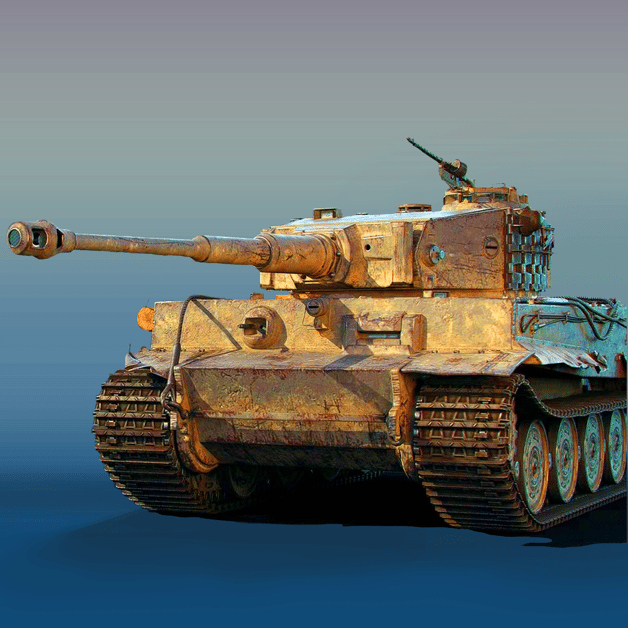
It is more than a machine of war. It is a myth forged in steel, a name that echoed across battlefields with a tremor of dread and awe. The Tiger Tank, the Panzerkampfwagen VI Tiger I, represents the pinnacle of a specific, terrifying philosophy: overwhelming force, technological supremacy, and psychological dominance. To engage with this vehicle—whether in a historical simulation, a war game, or a deep strategic analysis—is to grapple with a legend defined as much by its staggering power as by its profound complexities and ultimate tragedy. From its first deployment in 1942, the Tiger was engineered to be a battlefield titan. Its most defining feature was the unmatched 8.8 cm KwK 36 L/56 main gun, a weapon adapted from the legendary Flak 88 anti-aircraft cannon. At practical combat ranges, this gun could pierce the armor of every Allied tank it faced, often before the Allied tanks could effectively return fire. Coupled with its heavy, sloped frontal armor—virtually impervious to most standard anti-tank weapons of its time—the Tiger could dominate open terrain, holding a position against numerically superior forces. Its very presence created a "Tiger fear" that dictated Allied tactics, often requiring multiple tanks and significant artillery or air support to have a chance at a kill. However, the legend obscures a vulnerable reality. The Tiger's mythic status was its own cage. Its immense weight strained engines, broke transmissions, and limited it to robust bridges and roads, making it strategically immobile. Its staggering fuel consumption crippled logistics. Its intricate, over-engineered systems demanded meticulous maintenance from highly trained crews, something increasingly rare as the war progressed. More Tigers were lost to mechanical breakdowns and abandonment than to direct combat. It was a breakdown king, a masterpiece of engineering that failed the fundamental test of wartime production: reliability, simplicity, and strategic mobility. In gaming and simulation, the Tiger is often the ultimate "boss tank." It offers players a potent fantasy of near-invulnerability and one-shot-kill potential. However, the most authentic experiences force you to contend with its shadows: the agonizingly slow turret traverse, the vulnerability of its thinner side and rear armor, the constant anxiety over fuel levels, and the looming threat of a thrown track that turns a predator into a pillbox. To command a Tiger is to feel both powerful and profoundly isolated, a king on a chessboard who cannot afford to move into danger. The Tiger Tank, therefore, endures as a powerful paradox. It is a symbol of peak engineering ambition and a stark lesson in the perils of over-complexity. It represents both the zenith of German armored doctrine and a catastrophic misallocation of resources in a war of attrition. It is a monument to fear and a mausoleum of flawed genius. To study the Tiger is to understand that in war, the most terrifying weapon is not always the most effective one, and that a legend, no matter how formidable, can be immobilized by its own weight.